


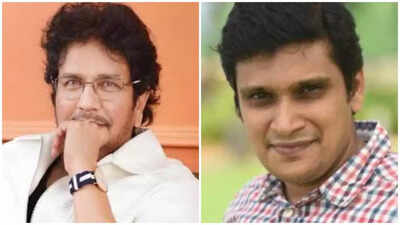
In an era where paparazzi videos trend within minutes and celebrity sightings become instant content, the idea of a “typical workday” no longer applies. For Mumbai’s paparazzi, the day doesn’t begin with a fixed routine or end with a clear sign-off. It starts early, stretches late into the night, and is dictated entirely by movement, instinct, and chance.“There is no fixed routine. The day starts early and ends late. You’re constantly tracking movements, coordinating with people, waiting at locations, moving from one place to another. It’s not just about clicking pictures — it’s about being alert all the time,” say paparazzi veterans Yogen Shah and Viral Bhayani, speaking to ETimes.From airports to film studios, gyms, restaurants, and residential lanes of Bandra, Andheri, Juhu, and beyond, paparazzi operate in a state of permanent readiness. Every location has its own rhythm. Airports offer predictability, events come with planning, but most celebrity appearances are unscheduled and fleeting.“There’s no such thing as a ‘typical’ day,” Bhayani explains. “Airports are different, Bandra is different, Andheri is different, Juhu is different. Events have a separate team altogether because those are planned in advance. Most celebrity moments are spontaneous.”
Spontaneity over scheduling
Contrary to popular belief, celebrities don’t alert paparazzi before stepping out. There are no advance calls, no secret messages.“No actor calls us saying, ‘I’m coming, please click my photos.’ If Virat Kohli is coming, he’s not going to phone me,” Bhayani says. “If you’re lucky and you spot them, you capture the moment naturally. That’s how this profession works.”That unpredictability is both the thrill and the pressure. Miss a moment, and it’s gone — possibly picked up by someone else or lost entirely. While events are pre-planned, everyday celebrity spotting depends heavily on awareness, intuition, and being in the right place at the right time.“It’s a mix. Events are planned, but celebrity spotting is 90% luck and awareness,” Bhayani adds. “You have to be alert all the time. If you miss a moment, it’s gone forever.”
The invisible contract: profession versus privacy
The most misunderstood aspect of paparazzi culture is the balance between access and intrusion. For Yogen Shah, that line is non-negotiable.“That line is extremely important. I have legal knowledge of what I can click and what I cannot. Based on that, I take photographs,” he says.He points out that celebrities are fully aware of the purpose behind a photograph or video — whether it’s for social media, publication, or news coverage. The interaction, he insists, is professional on both sides.“Celebrities may not know our names, but they recognise our faces and our cameras. They know we’re professionals.”The real failure, according to Shah, is when a celebrity regrets consenting to being photographed.“The worst situation would be if later a celebrity feels, ‘Why did I allow this? I shouldn’t have.’ That should never happen after seeing the final result.”
When celebrities say no
There are moments when actors refuse to be clicked — and paparazzi say that’s entirely acceptable.“Of course. And that’s completely human,” Shah explains. “If a celebrity says, ‘Not now, I’m not comfortable,’ we respect that.”He draws a simple analogy: just because someone declines once doesn’t mean something is wrong.“At home, your mother serves food every day, but one day you may say, ‘I’m not hungry today.’ That doesn’t mean anything is wrong.”At the same time, Shah acknowledges the delicate balance media operates under.“Publications involve hundreds of people. If everyone stops giving photos, the publication won’t run. So there has to be balance and understanding on both sides.”Bhayani also stresses that boundaries are non-negotiable.“You must draw a line. If someone says no, you respect it. We don’t boycott celebrities if they refuse. That’s wrong,” Bhayani says.For paparazzi, the job often continues even when the subject leaves. “Our work is our religion. If someone wants to go home, they go. We stay. Because if the job doesn’t get done, we can’t sleep. This generation wants everything fast, but patience is everything in this field,” he adds.
No tantrums, no threats
Despite working with some of the most powerful names in the country for decades, Shah says disrespect is rare.“You meet people who are a thousand times bigger than you — in wealth, influence, fame — yet they never disrespect you.”Celebrities, he notes, don’t impose conditions while being photographed.“Never. If they don’t like something, they call politely through PR or message directly and say, ‘I didn’t like this part.’ That’s it. No shouting. No threats.”
Three decades behind the camera
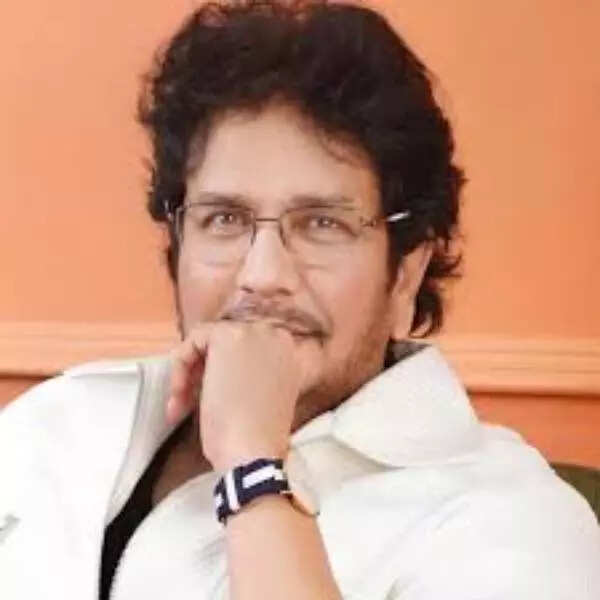
Yogen Shah’s journey mirrors the evolution of entertainment journalism in India. He began as a freelancer with The Times of India in 1992, a time when the media landscape was far more limited.“Back then, The Times of India was everything. There were no multiple branches. Everything happened in the CST building,” he recalls.Bombay Times’ Page 3 didn’t initially feature film photographs — that changed with Shah’s work. Mumbai Mirror’s first issue carried his images. ETimes, which began as a TV magazine, also featured his photographs in its early days.“For me, The Times of India is a temple,” he says.Physically, paparazzi work is exhausting. Mentally, it’s relentless.“I can’t exercise properly,” Shah admits. “My trainer comes home and sits for hours because I keep getting calls. A workout meant for one hour takes five hours.”The mental load is heavier.“One shoot at 5 pm. Another at 6:30 pm. A photographer stuck in traffic. Missing one picture affects ten publications. That pressure never leaves your mind.”Despite living cinema daily, Shah’s relationship with movies remains deeply personal.“Watching one film daily is my emotional food,” he says.Unable to sit through theatrical screenings due to constant distractions, he built two theatres at home. Yet the excitement remains intact.“Even today, I wake up thinking, ‘I’ll watch a movie today.’ That childlike excitement keeps me alive.”
From film rolls to digital overload: how the profession has evolved
The paparazzi ecosystem today is unrecognisable from when Bhayani began. What was once slower and financially modest has become high-investment, high-stress and hyper-competitive.“Earlier, life was slower and simpler. It wasn’t financially strong, but it wasn’t mentally exhausting either,” he recalls.“When I started, I didn’t even own an SLR camera. My junior had one, I didn’t. Buying an SLR was a huge deal.”That turning point came unexpectedly. “I earned that money by selling Shilpa Shetty’s photos when she became famous internationally after Big Brother. She literally helped build my career.”Today, the scale has exploded. Cricket, Bollywood, business leaders and influencers all occupy the same visual economy. “The market is huge. Events have multiplied. To cover everything, you need a big team, which means heavy investment,” he explains.
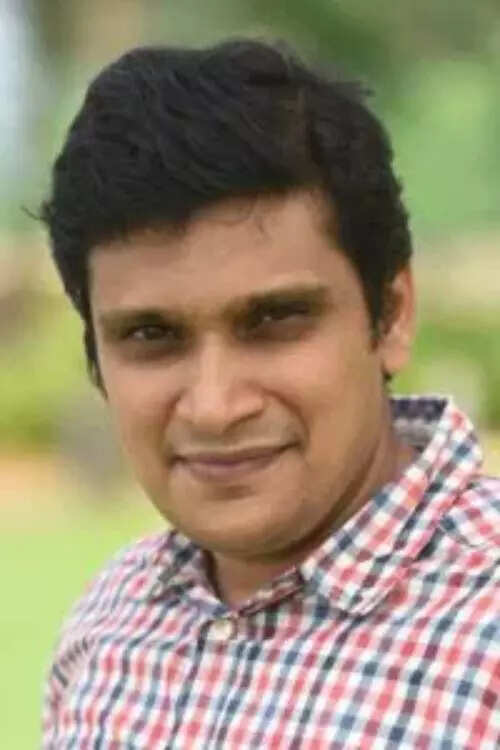
Interestingly, paparazzi work was never part of Bhayani’s original plan. His entry into the field was accidental, driven by circumstance rather than ambition.“No. I wanted to work in PR. I gave CAT exams but couldn’t crack English or Maths. MBA didn’t work out,” he admits.Instead, he leaned into content. “I focused on storytelling. I worked globally, especially for the NRI market, where money was better. I handled everything myself—photos, articles, layout ideas. I was a one-man show.”That adaptability, he says, is what kept him afloat. “I brought content, images, stories, and even ads. That’s how I survived and grew.”
Social media judgment and self-correction
In the social media age, paparazzi are scrutinised as much as the celebrities they photograph. Shah believes self-evaluation is crucial.“If I was late delivering a photo, I’m wrong — I accept it.”Random criticism, however, must be filtered.“People will like, dislike, comment — that’s part of the job.”For him, the audience ultimately decides the value of his work.“My favourite shots are the ones people love. I work for people. Their reaction decides what matters.”
More than money
Would he recommend paparazzi work today?“Yes — but not for money alone,” Shah says firmly.He recalls how, during the lockdown, many celebrities supported photographers financially without being asked.“That tells you everything.”One moment that stayed with him was a recent encounter involving Rashmika Mandanna.“A boy was standing far away. She herself called him closer and hugged him — without thinking about status, hygiene, cameras, anything. That’s blessing energy.”
The cost of sacrifice
For Viral Bhayani, the biggest price of the profession is personal.“Patience. And sacrifice,” he says.“You sacrifice family time, birthdays, anniversaries, holidays — everything. I’ve never celebrated birthdays or anniversaries. Leaves don’t exist in our dictionary.”The work demands constant mental agility.“This is not a job for slow or lazy people. You need creativity, speed, sharpness, and stamina — all together.”
Health, discipline, and hard lessons
Bhayani admits to ignoring his health early on.“Bad food, no fixed meals, heavy camera bags, travelling in local trains — it destroys your body.”Today, he insists on discipline within his team: eat clean, exercise, avoid alcohol, and prioritise mental health.“You wait for six hours, and the actor says no. You don’t know what they’re dealing with. You must control your ego and emotions.”
Fame, business, and misconceptions
With massive social media followings, paparazzi pages have become businesses.One of the biggest misconceptions around paparazzi work is the assumption of fixed rates and uniform earnings. According to Viral Bhayani, nothing about the business is standardised.“There’s nothing fixed. Everyone decides their own pricing. It depends on your page’s reach—someone has 50 million followers, someone has 20 million. Brands decide based on ROI. If one post reaches a million people, the investment makes sense. This is business, just like newspapers run on ads.”In the social media era, paparazzi work sits at the intersection of journalism, content creation and digital marketing. Reach determines value, visibility drives revenue, and consistency keeps the system running—much like legacy media models, only faster and far more unforgiving.Yet the biggest misconception persists.“That we are intrusive. We’re not. If someone complains, we change our approach immediately.”
Consistency is everything
Bhayani recalls being pushed aside by PR teams in his early days.“They wouldn’t even let me stand near events. Today, the same people invite me personally.”From standing in ticket queues and buying black tickets to review films, to now not stepping into theatres at all, the journey has been long.“Life changes — but only if you stay consistent.”
No hierarchy, only gratitude
Both photographers agree on one philosophy: there are no big or small stars.“Every star who gives me a photograph is equal,” Shah says. “My livelihood exists because of them.”For those romanticising paparazzi life, Bhayani offers a reality check.“Be prepared for hard work, patience, and sacrifice,” he says, listing the non-negotiables: alertness, sharp thinking, speed, and communication skills.“If you’re not disciplined, don’t enter this field.”For paparazzi, the camera may be the tool — but humility, patience, and discipline are the real currency.And in a city that never stops watching, they never stop working.